

Reading time: 6 minutes
Welcome and thank you for being here. Running Home is a weekly newsletter about awareness, self-reliance, health, and freedom. Real stories, honest struggles, and the hard-won lessons from someone who chose to change his life completely.
If this resonates, Subscribe and join 500 readers.
“His claim is that when you have a 0.05% BAC you’re more relaxed, and poised, and musical, and open. More courageous in general.”
— Another Round (2020)
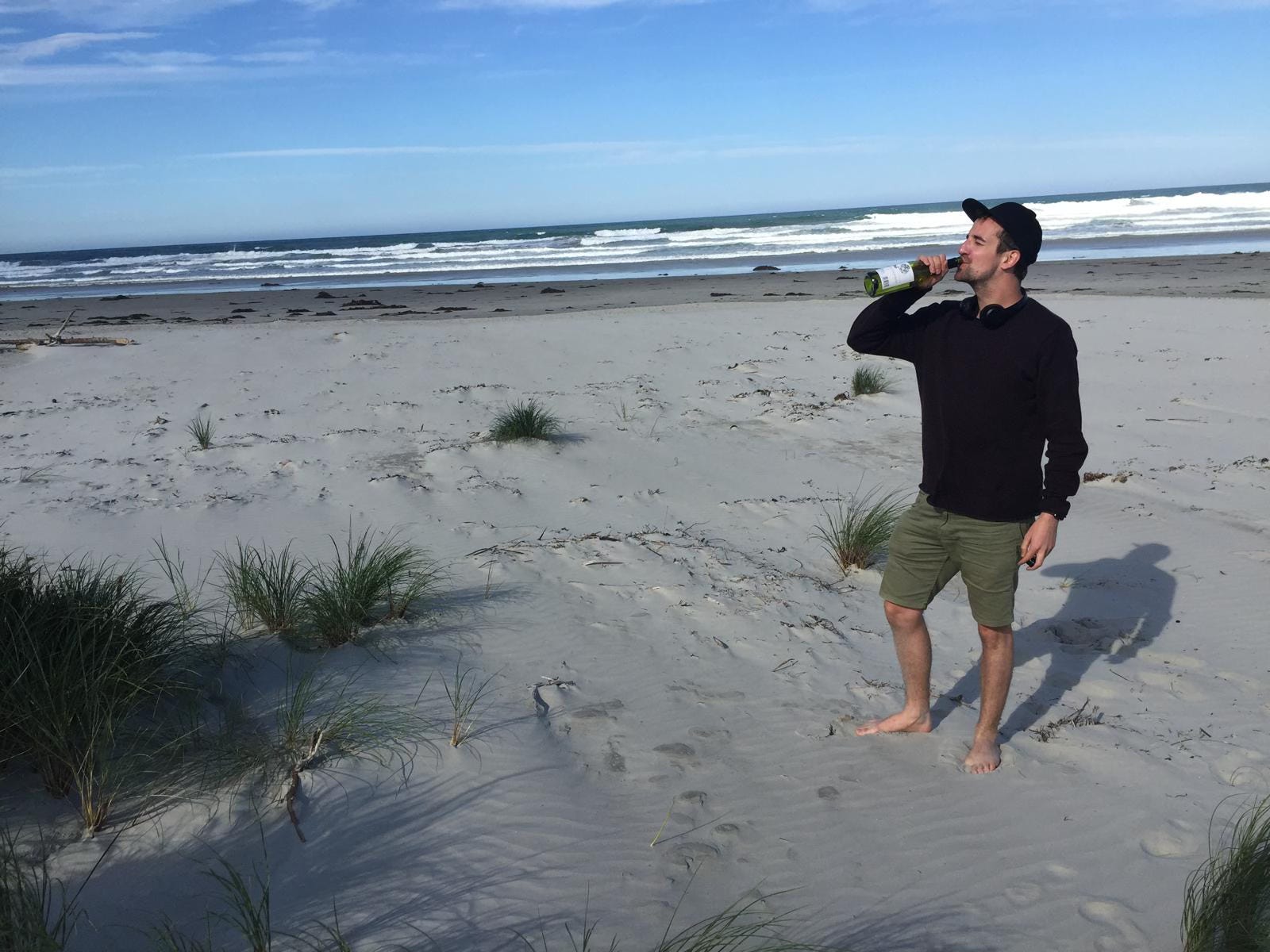
Most people don't drink because they love alcohol. They drink because they love who they become when they drink.
To understand what happens when you quit alcohol, you need to understand what it was giving you in the first place.
This is that story.
The whole journey splits into three chapters:
Before I touched alcohol.
The years I drank.
Life after becoming sober.
This article covers the first two.
Next week, I’ll cover the third.
I’ve also written about the health side of quitting and how to do it. If you’re interested, check them out:


Alcohol in my life before I had my first glass
I grew up in a family where alcohol was always present. Both of my grandfathers died from its consequences and my father followed the same path, misusing it as often as possible. My mother never drank, only a glass of wine at Christmas, because she had the opposite reaction to her husband’s alcoholism. She hated it. But because it was familiar, she tolerated it.
Both of my parents suffered from anxiety in their own ways. My mother lived in a constant state of worry, a kind of self-generated terror. My father fought feelings of not being good, strong, or valuable enough. He was deeply jealous, and alcohol amplified everything.
Fights, yelling, broken glasses, and worse were simply part of everyday life.
This made it impossible to have friends over because the situation was always too unpredictable.
My parents never had friends.
Growing up in that house, I learned quickly not to invite anyone either. My brother was six years older than me and always out with his friends. I stayed home, managing my mother’s misery and waiting for my drunk father to return so our daily tradition could begin.
Why am I telling you about my broken family?
Because those circumstances shaped my relationship with alcohol before I ever took a sip. Due to constant isolation, I developed social anxiety early. I turned red the moment I had to speak in front of a handful of people I already knew because I felt so insecure.
My mother’s constant criticism gave me the sense that I wasn’t allowed to make mistakes or just be myself, because that would embarrass her. She had a narcissistic personality, she needed constant attention and often withdrew her love when I didn’t do something right.
Her behavior made me feel like everything was my fault.
I became a child who worried constantly. I couldn’t measure my cortisol levels back then, but I was running on chronic anxiety. I didn’t know what I wanted because I was never encouraged to explore my own interests and nobody asked me about that either. My parents never knew what music or movies I liked, which kids I was hanging out with at school, nothing. My only job was to manage my mother’s emotional needs. When other kids’ parents asked why I was so quiet, I said I didn’t know, smiled, and shrugged my shoulders.
I had nothing to say, or at least nothing I believed was worth saying.
At school, I was one of the best students because failing would embarrass my mother. But socially, I was lost. We never had guests at home, so I never learned how to be around other people.
I declined every birthday party invitation because if I went, I’d have to invite them back, and I had no birthday party to give. I lied constantly. Made up reasons why I couldn’t come. Pretended we had vacations we never took.
I hated it, because deep down I wanted what they had. Cool parents. A normal house. To be the kid who made everyone laugh.
Instead, I carried years of unexpressed anger, unmet wishes, and the feeling that I simply wasn’t built the same way as everyone else.
Quick favor: If this resonates with you, I’d be grateful if you subscribed to Running Home. I share more stories like this about growth, awareness, and the messy journey back to yourself. It’s free, and it helps me keep writing honestly.
Alcohol gave me the life I always wanted
I was 14 when a friend suggested we drink together. He already had experience with alcohol once or twice but for me, it was the first time. Maybe at home I had licked some from my father’s beer once but that was all. We went to a supermarket and bought cherry liquor and mixed it with Coke.
After the third plastic cup, it kicked in.
We laughed. I tried to walk to a tree to pee and couldn’t go straight. We laughed more at ourselves and finished all four small bottles we had. That night we went to a teenage disco, running down the middle of the street on a Saturday evening. My eyes were almost closed and I was cheering loudly, stumbling from side to side.
It felt like Andy Dufresne walking out of Shawshank.
Except instead of a physical prison, I had just escaped the mental one I’d been locked in for the first 14 years of my life. I didn’t feel worried anymore. I didn’t care what other people might think about me. We were in another city anyway, and the alcohol made me feel free.
After that night, I knew I had found the solution for my anxiety and being socially awkward: alcohol.
Drinking and partying became my regular escape. I went to parties every weekend, not because I wanted to enjoy the music or because I was interested in those people. That was also part of it, but I simply needed to get out.
I danced carelessly and also started smoking as a small symbol of freedom.
Honestly, I became cooler. I talked to strangers, told jokes. They laughed and patted me on the back. My social circle grew for the first time in my life.
You can imagine what that meant to a kid who had spent years believing he wasn’t good enough.
Hangovers became familiar but I was more than ready to pay that small price for my new, enhanced life.
Sundays were for lying in bed and suffering a little. Sometimes I went out on Sunday too and drank a beer or two.
At university, I moved as far from my parents as I could. I chose the school by distance.
And it worked.
By that time, I was an experienced drinker. I quickly found new connections with people who shared my admiration for the booze and we drank almost every day, skipping seminars, heading to the bar at 1pm for table soccer and gin tonics.
Those people didn’t know my background. After a few beers, I talked like I belonged.
I organized my first birthday parties. One night I kissed one girl in one corner of the bar and another in the other corner. The first found out and poured half a liter of wine in my face.
My friends said I was so cool and I was so proud.
Looking back, I was still an insecure kid. Just also an asshole. But I didn’t care. I was catching up on everything I had missed.
Alcohol helped.
After graduating, came work.
I never drank during office hours, that much discipline I had. But I lived for the moment someone said “drinks after work?” The answer was always yes. I remember one evening when colleagues from headquarters were visiting. I arrived late. About ten people were sitting almost silently at a table. Then one of them spotted me and said: “David! Finally. It’s been so boring. When you’re here it’s always fun.”
I’ll never forget that. Someone was happy I walked in the room. I ordered a beer, lit a cigarette, and started talking.
I was proud, again.
What they didn’t know was that I had already drunk three beers at home before I left.
I always did. I sat on the balcony, had beers or a gin tonic, smoked, put on music until I felt right, and then I left.
Without that ritual, I was nervous.
Because no matter how many good experiences I collected, no matter how much positive feedback I got over the years, inside I was still the kid from elementary school who didn’t know how to be in a room with people.
I didn’t get better with people. I got better at drinking.
There were moments it was obvious.
Meeting a girlfriend’s parents sober, sitting quietly at the table while everyone wondered what was wrong with me. But the moment the first drinks came out and her father asked me outside for a cigarette, I knew what to do. I drank as fast as I could without looking like I was doing it.
Two drinks in, I started talking. Asking questions. Making them laugh.
My girlfriend looked over with that look in her eyes, proud of the funny guy she had brought home.
Every man on earth wants that look from his girl.
And finally, I got it too.
Alcohol helped again.
After 20 years of moments like these, I think it’s understandable why I kept going.
At least I have empathy for my own behavior.
And I’m sure many of you recognize something here. The deep underlying need to be liked. To feel cool at least once. The feeling of belonging. The courage that doesn’t come naturally.
The mental prison with a liquid key.
But as we all know, nothing lasts forever.
When alcohol stopped working
You know how a hangover gets worse as you get older.
If not, don’t worry, you will learn it.
Your body starts sending different signals. It started for me around 32 but I held on until 35.
By then it had become bad. If I drank heavily on a Saturday, I still felt wrecked by Wednesday. I wanted to throw up in the gym five days later. The social benefits started disappearing too. I drank and felt a little more relaxed, but that free, euphoric mode was gone.
After a few beers my body was a mess while my mind stayed sober, watching.
During drinking, my mind would wander to the next day, thinking about the consequences of the next beer we had just ordered. I knew I wanted to open my eyes on Sunday feeling fresh, not that feeling you probably also know, when your eyes open in the morning and you know immediately that you’re screwed and it will be a day about survival.
Just thinking about that made me not want the beer sitting in front of me.
Then one evening, after I had drunk a bit more again, I caught my reflection and saw my father.
That image didn’t leave me. Without the social benefits, and with my body rejecting it, I felt disgusted. I couldn’t walk straight and when the waitress came with the bill I couldn’t express myself properly. My words mixed up.
So I started reducing more and more. Sometimes I’d nurse a single beer for hours and sometimes leave it on the table unfinished. My only wish was to wake up fresh in the morning.
Slowly, I moved from drinking to belong to just enduring it to fit in.
Until one day I was done.
Two years ago, I stopped completely and I haven’t had a drink since.
Many people are scared to stop because they don’t want to lose exactly what I described above. They search online about how it feels to be completely sober. Some of them want confirmation that quitting makes life miserable so they can continue drinking, or that quitting makes life better without losing the version of themselves that only exists when they drink.
That’s the question I couldn’t answer for 20 years either.
But you’ll find an honest answer here soon.
Because that’s the story I’m telling next week.
Thank you for reading.
It means a lot that you spent your time here.
If this resonated with you, the best thing you can do is share it with someone who needs to read it. A comment or a like also means more than you think, it tells me that this kind of writing is worth continuing.
And if you are not yet subscribed, you are welcome to join the journey below.
I resonated with this a lot, David. Particularly the line ‘I had nothing to say, or at least nothing I believed was worth saying.’ That was me, exactly. I also drank for social confidence and also to numb my pain. I never made a decision to stop, just to drastically reduce. That did work for me. I think falling over and knocking myself out frightened me enough that I never lost control again. That was 30 years ago. I notice these days at 67, that I like alcohol less and less.💕
Fantastic writing David. Your description of social anxiety around people and how alcohol provided a quick fix to bonding with others was spot on. I drank way too much at university for exactly this reason.