


I’ve been a runner for the last three years. Training, stretching, planning, running shoes, and marathons became part of my life, and I love it.
It’s great to participate in events like big marathons around the world and meet like-minded people who enjoy this simple activity. I feel like I belong to the running community.
But running isn’t just a hobby I practice regularly. It’s also been a teacher. This sport taught me more about life than my own parents did. It gave me the mindset to master other areas of my life as well. It helped me understand what consistency and discipline really mean beyond frequently used buzzwords.
I want to share this wisdom with you, not just to motivate you to run (okay, maybe that too), but because these lessons helped me build the life and mindset I always lacked. They gave me unshakable inner strength, confidence, and loyalty to myself.
Here are the most important lessons that three years of running taught me.
Being Fit Changes Everything
People tend to overestimate their fitness level. I certainly did. Back when I was a smoker who drank alcohol regularly and went to the gym two or three times a week, I used to tell myself I was actually fit. I don’t know if it was a protective mechanism or if I just loved the sound of that sentence, but I was lying to myself.
When I had to take the stairs at the metro station, I’d be out of breath. When I helped friends move and carried a few boxes, I needed a break after each trip. And I was in my 20s. Looking back, it’s obvious I was in terrible shape.
After three years of running, I have a different understanding of what being fit means. I’m 38 years old and I feel great. I have energy every day and can take the stairs anytime without even switching from nasal breathing to mouth breathing. I always see young people taking the stairs next to me looking like they just finished a marathon. They’re breathing heavily, their faces distorted. I remember how that feels.
But being fit isn’t only about breathing easily. It’s about being able to participate in other activities like hiking or cycling without even thinking about whether you can do them. You know you can. You have more choices, which means you have a richer life. You can help other people better. You can play with your dogs and kids. You don’t have to be the blocker in family activities because you can’t keep up.
Being fit is amazing.
From my running experience, I’d say that if you can run 10 km (6.2 mi) without being completely exhausted, that’s a good sign. But you can choose your own activity to achieve the same level.
I Can Do Way More Than I Thought
Growing up with the mindset “I’m not good enough” was always a limitation. I always thought I was weak with poor genetics. When I first considered running a marathon, friends asked with surprise if I was even able to run a marathon at all. Obviously, those questions created more doubt.
But running is a great sport where you can control distance and speed on your own and adjust based on how you feel. So I started training anyway. I remember that at the beginning, running 10km (6.2mi) seemed unimaginable. Then when I ran 20km (12.4mi) for the first time, which isn’t even a half marathon, I celebrated it intensely. These milestones showed me that maybe there was more in me than I thought.
I continued with my training (it was literally bro training, nothing professional) and achieved 25km (15.5mi), then 30km (18.6mi), and one day I ran 35km (21.7mi) for the first time. On that day, I felt dizzy because I didn’t have a good hydration and nutrition strategy, but I did it. The last 5km (3.1mi) I ran circles around my apartment building because I was scared I’d drop unconscious or even die, and I wanted to be able to get home quickly.
After 35km (21.7mi), the last step was running the marathon. I did it. I was exhausted, but deep down I knew I’d held myself back because I didn’t want to risk not finishing. But on the last kilometer?
I literally sprinted.
From that moment when I finished my first marathon and proved to myself what I was capable of, I started asking: What else can I do that I thought I couldn’t? In which other areas of my life did I avoid things because I limited myself with the belief that I’m not good enough?
These questions changed my approach to work and dreams completely. Today, I don’t ask if I can do it. I ask how I could do it. That mindset shift eliminated self-doubt and boosted my confidence. I know that if I have a proper plan and work toward a goal regularly, I can achieve almost anything.
“7 Bad Days and 23 Good Days Is a Great Month”
Running helped me turn my black-and-white, often perfectionist thinking into a more nuanced mindset. Earlier in my life, if I had a bad day in a week, I’d say the whole week was bad. I let one bad day define everything. If I couldn’t deliver the same performance every day, I was sure I’d failed. I gave too much power to bad days while undervaluing good ones.
Either perfect today or nothing was my primary mindset. This led to giving up quickly when I didn’t get perfect output. If I lost 2 subscribers in a day or 20 followers on X, I’d think I’d absolutely failed and want to quit immediately.
Running changed this. A marathon training usually takes at least three months, and the only thing that matters is the result at the end. If I have a bad day on Monday and run slower than planned, or if I have to run a shorter distance because I don’t feel great or have an injury, that doesn’t mean I should quit immediately.
If I have 3 bad training sessions in two weeks, I’m still doing a great job.
The same applies to gym sessions, writing, reading, or anything that’s a long-term game. Before my first marathon, I skipped training, got sick, and couldn’t run because of work, but I still finished with enough energy to sprint the last kilometer.
I started applying this to other areas of my life.
Read only 2 pages of my book? Great.
Only wrote 300 words? Great.
Felt weak and just did some biceps curls in the gym? Awesome. I was there.
I stopped thinking about one day’s performance as defining my overall effort. That helped me establish better consistency and look at myself much more positively.
Today, if I have 7 bad days and 23 good days in a month, I consider it great and I’m confident the next month will be even better.
Quick favor: If this resonates with you, I’d be grateful if you subscribed to Running Home. I share more stories like this about growth, awareness, and the messy journey back to yourself. It’s free, and it helps me keep writing honestly.
Patience Is an Underrated Life Skill
Another weakness I had is not being patient enough. I always wanted quick results. That was part of my black-and-white mindset. If I could have it now, great. If not, I didn’t want it at all. I started many blogs and tried building social media presence, but when I didn’t get the results I wanted quickly, I simply quit.
Running taught me patience in a simple way. In endurance sports, you can achieve quick success at the beginning. You’ll be able to run 5 or 10km (3.1 - 6.2mi) in a short period. But then development slows down. Visible improvements get rare, and it feels like you’re only putting in work without achieving huge milestones.
But that’s not the truth.
Improvement is happening under the hood, in my body. My heart gets stronger.
My technique improves. My overall running dynamic gets better, but over a longer period. Until one day, I realize my heart rate is lower at the same speed. The higher pace feels more normal and I can hold it longer.
To achieve these moments, we need patience.
One week after another.
One month after another.
People say building endurance takes years, and they don’t lie. Applying this mindset to other areas of life can be very beneficial.
Thanks to this, I didn’t quit my job and got a promotion. Thanks to this, I didn’t jump into bad relationships. Because of this, I gave myself time to think about important decisions and didn’t act on impulses.
If somebody asks me for life-changing advice, patience is always in the top 3.
Doing Hard Things Regularly Is a Life Hack
I’ve heard about this a lot, but I only started feeling it when I switched from a hobby training plan to a more ambitious one.
Why?
Because my first training plan wasn’t hard enough.
I skipped training when it was raining. I went to the gym to run on a treadmill when it was cold, which is much easier than running outside. When I slept poorly, I skipped training. When it hurt, I slowed down or stopped. I couldn’t feel the positive effect of doing hard things because I didn’t do anything hard.
Then I set my first time goal for my next race, and everything changed. I watched videos about improving my running form. The experience after my first marathon, with the energy on the last kilometer, lit a fire in me. I wanted to become better.
After that moment, there were no more excuses. I understood that discipline makes the difference between the guy who runs a marathon in 4 hours and the one who runs it in 3 hours.
The rise of my ambition led to an unexpected benefit: the effect of doing hard things regularly. The first thing that comes to mind is that if I do a very hard interval training in the rain, on my way home I feel accomplished. I smile. I look at myself in the mirror next to my front door: completely exhausted, wet, and dirty. I feel like a gladiator in that moment.
After these trainings, my day only gets easier. It doesn’t matter what challenging task or meeting I have later because I know the hardest part is already behind me. It gives me confidence. I feel like Russell Crowe in Gladiator and I know nothing can defeat me.
Even if it sounds silly, it’s true. Doing hard things regularly increases my tolerance for pain and stressful situations.
The confidence from those hard things gives me the self-image of a man who doesn’t give up when situations get hard.
I can trust myself much more because I know I have the strength that carries me through difficult times.
Many of these elements develop simultaneously, and they brought my life to a level I couldn’t even imagine before.
The Finish Line Won’t Make Me Happy
We love to believe that achieving X will make us happy. I believed that too. But the harsh truth is that if we’re not happy along the way toward our goals, achieving those goals won’t make us happy either.
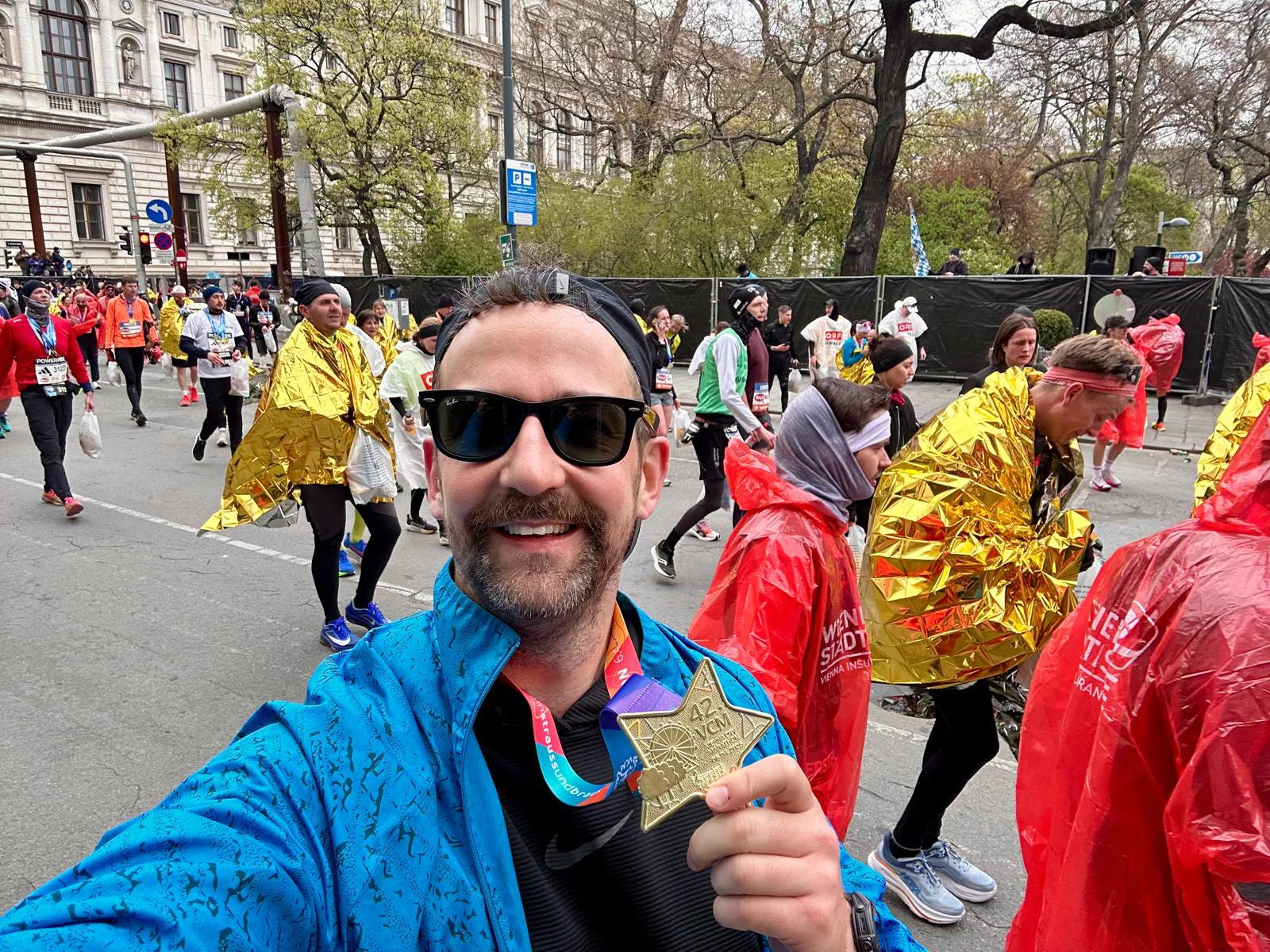
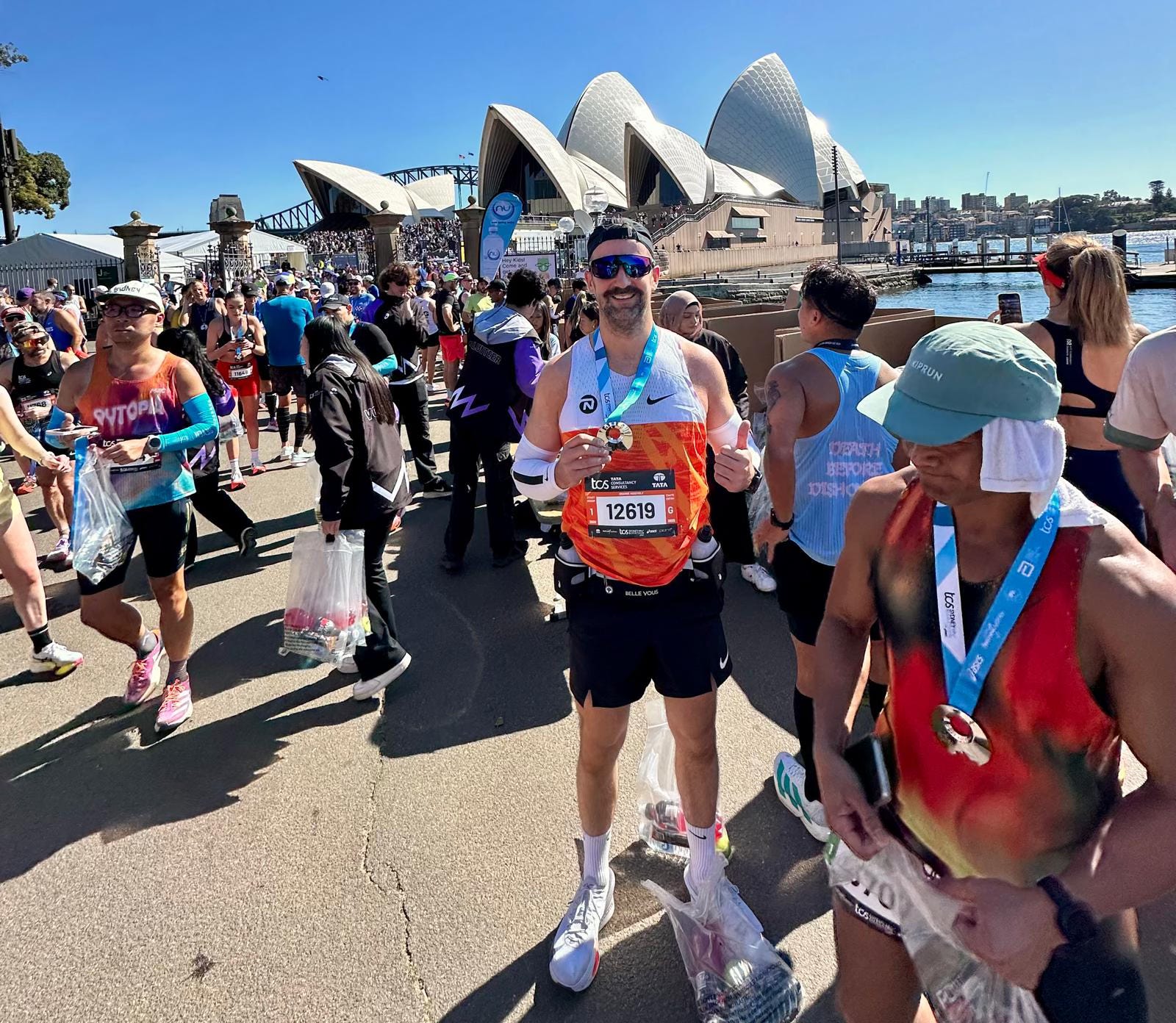
This was a big realization after I ran my first marathon in Vienna. I finished the race and didn’t feel any different than after a regular training. Don’t get me wrong, it was amazing to cross the finish line and I was happy about my result. But I didn’t feel happier than before.
I had this question unwillingly on my mind: Why did I run that marathon at all?
After a couple of days of reflection while having a running break so my body could recover, I started to miss my training. Being outside, learning about running technique, checking out new running shoes on the internet, the feeling of accomplishment, talking about running with other like-minded people, posting on Strava how the training went.
These feelings gave me the answer to why I ran that marathon.
Because I love the way to that event. The months of training, the good and hard times, and everything that comes with being an everyday athlete.
I understood that the race is just a tool to give me a path and direction, but it’s not the most important part. The most important is the journey.
That’s what makes me happy because I love running.
Since understanding this concept, I’ve started looking at my life and asking where else I could have an enjoyable journey. Obviously, my full-time job came to mind. The goal can be a promotion or a raise, but do I enjoy my daily job enough to go in those directions? When I have a girlfriend, do I enjoy everyday life with her or only the big moments?
These are very important questions to raise. I started to shift from focusing on the romantic image of the end of my life, where I saw myself in a house with a wife, dogs, and garden in a Hollywood kind of way. I know that what I’ll have at the end of my life doesn’t really matter.
What truly matters is if I enjoyed the way there.
The regular weekdays.
My small hobbies.
My job that I spend so much time with.
We’re all going to cross that finish line of our life, but that’s not what makes us happy.
The journey is what matters.
My Conclusion
Running taught me a lot about life, about my own body, and how I look into the future. But it doesn’t have to be running. I’m not here to promote this sport and convince you to buy nice running shoes. It’s not about that.
I simply wanted to highlight what the simplest hobby can teach us when we take it seriously. When we go beyond and walk the extra mile. I learned all these things when I started to handle running like something that matters. It went from a little hobby to an important part of my life.
I’m ready to sacrifice free time for it. I’m ready to spend money on it. I’m ready to get wet, dirty, injured, and completely exhausted for it.
And I can tell you, if you start treating something in your life like I treat running, that thing will teach you a lot about yourself and life in general.
So don’t half-ass it if you love it.
Give it your best and watch how your life changes.
Thanks for sticking with me through this one. If you’re going through something similar, or have your own experience with this, drop a comment. I read every one. — David
Read More:


I always feel more energized as I read your "stu.ff"