

Reading time: 8 minutes
Welcome and thank you for being here. Running Home is a weekly newsletter about awareness, self-reliance, health, and freedom. Real stories, honest struggles, and the hard-won lessons from someone who chose to change his life completely.
If this resonates, Subscribe and join 600 readers.
"The emotions we don't express don't disappear. They live in the body." — Gabor Maté
This one is close to my heart and I hope it resonates with you.
I was sure that I was just messed up.
For almost 35 years, I did not speak the language of my body at all.
Sore neck for three weeks? I ignored it. Daily panic attacks during university? I assumed something was fundamentally broken in me. When I got my first job and had shaking hands and a racing heart at work? I carried on. I once called an ambulance because I was convinced I was dying. That was a panic attack too. And the sad thing was that not even the doctors wanted to understand what was happening inside me.
They gave me some pills to calm myself down when I would get another panic attack and that was it.
All of this because I grew up in an environment where I learned to put my own needs aside. There was no space to pay attention to what my body was telling me and I never learned how to. Later in college, my body started to send me signals I couldn’t really ignore, but still I never thought about the real reasons.
Today, I understand what those signals actually meant.
The panic attacks were the eruption of years of accumulated, suppressed stress that my body could no longer contain after I moved out of my parents’ house where I lived under constant pressure.
The shaking hands were a sign of running on completely empty for months at work, pushing through with energy drinks, cigarettes, and bad sleep, without realising it.
The alcohol I used to calm myself down was not calming anything, but it was disrupting my sleep even more and I lost myself in the downward spiral more and more.
I did not know that my body was trying to tell me: Hey dumbass! Slow down! Sleep! Eat well! Reduce stress and do sport!
Now I know. I guess better later than never.
Maybe you also need to learn to understand your body, because if you need three coffees before 11 in the morning, yawn through the afternoon, and fall asleep on the couch but struggle to sleep in bed, that is not normal.
If you have sore shoulders, recurring headaches without any known reason, or even problems with your digestion, that is not normal.
If you have been living like this for years and believe it is normal because it was always like this, that is not normal.
Many of us live with these problems and believe it is just how life is.
But what if your body has been sending signals the whole time and you simply never learned to read them?
The headache that comes back every week could be a result of constant stress, just like the shoulders or neck that can’t relax.
The poor sleep that leaves you exhausted before the day even begins, which you dismiss as just getting older because you read somewhere that older people don’t need as much sleep.
There are people who might notice these signs and take action to solve the underlying problems, but there are many others, including me, who never learned to notice them at all.
The stress you do not know you have
There is a kind of stress most people never recognize because it never produces any dramatic symptoms.
I’m not talking about the deadline kind of stress, the one you feel in your chest when your boss sets an impossible deadline for an impossible task.
That mental stress you feel immediately.
I’m talking about the low-level, constant physiological stress that sits underneath your daily life and quietly raises your heart rate, disrupts your sleep, and keeps your body in a state of mild emergency for months or years at a time.
The reason can vary.
Maybe you’re angry at your partner all the time but you don’t want to express yourself because you prefer harmony.
Your daily job is draining you silently every single day because you grew up with the belief that work sucks and it’s just how it is, and never thought about doing something about it.
But it makes you feel exhausted every single day.
This silent chronic stress also lowers your heart rate variability, which is the natural variation in time between your heartbeats. High HRV means your body is recovering well and handling stress effectively. Low HRV means the opposite.
Most people have never heard of it, and almost nobody knows their own numbers, and why should they?
If there are no alarming symptoms then why should you worry at all? This is how our medical system works today, right? No symptoms, no problems. Which is very bad in my opinion.
Recently I read the book by Gabor Maté, The Myth of Normal, and he also discussed this problem thoroughly.
The ignored stress and suppressed emotions that put your body into a constant state of worry. The anger you swallowed for decades just eating you from the inside.
Usually this problem turns into bigger health issues later on when it stays uncovered, because the body has no other choice but to make you aware of the problem.
This is the moment when people get those diagnoses and start changing things in their life rapidly. And then they ask themselves that one question when they feel better immediately after quitting the job, leaving the relationship, or talking openly to the boss: why didn’t I do this earlier?
Well, because you didn’t really know that your body was sending signals to you over the years and you just thought that everyone else feels the way you feel.
Most people have no idea what it means to feel really good, just fine, or really bad because they might never have entered the upper area of those feelings, and when they feel just fine, they believe that they feel great.
All these feelings are relative.
And it’s not only about stress but also sleep and muscle tension, energy level and mood.
If you have never slept eight genuinely restful hours, you do not know what truly rested feels like.
Your exhausted is your normal. And no amount of coffee changes that.
Quick favor: If this resonates with you, I’d be grateful if you subscribed to Running Home. I share more stories like this about growth, awareness, and the messy journey back to yourself. It’s free, and it helps me keep writing honestly.
What I found when I started tracking
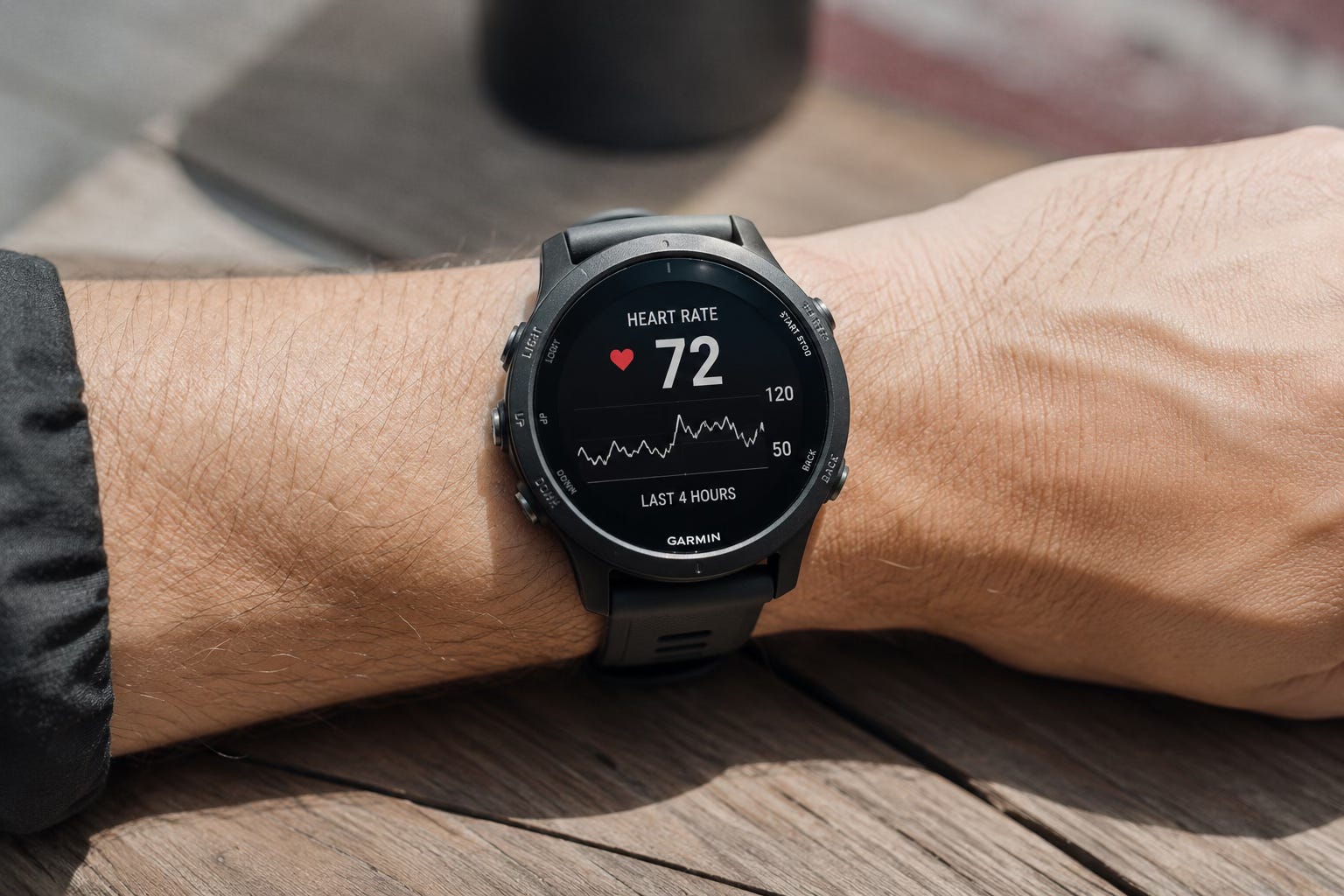
Four years ago I bought a Garmin watch to track my runs, but I was really curious about my sleep quality as well. At the time I had read enough about self-development and I knew that I could only implement changes in my life when I first understood the status quo. And in order to do that, I needed to bring technology in as a support system.
What happened over the following months changed how I understood myself.
The first morning I checked my sleep data after wearing the watch, I was surprised. I knew my sleep was not great, but I had no idea how bad it actually was.
I was waking multiple times a night. My REM sleep, the phase most important for memory, emotional processing, and creativity, was extremely short. I had been drinking many coffees before noon and felt exhausted during the day, and I had assumed this was just who I was.
I remember that I often woke up when my alarm went off at 7am and I couldn’t believe that it was already 7am because I felt like I hadn’t slept at all.
When I recall those moments, I have to smile about it because the way I lived, drinking too much alcohol, smoking, eating a lot of heavy food late at night, it was almost impossible for my body to calm down and sleep well.
So I was regularly underslept and I had normalised it for many years. And I didn’t really know about it because everyone else in the office drank 4-5-6 coffees during the day, so I figured I fit in.


I also got to know how my nervous system works. Heart rate variability shows how activated my parasympathetic nervous system is when I watch an exciting movie, spend time with a lot of people, eat heavy food, look at screens, get into deep work flow, or read a book on my balcony.
It surprised me how strongly activated my nervous system is when I spend time with people, and how calm I am when I am reading a book silently. When I watch an exciting movie in the evening, my body can’t calm down and it disrupts my sleep.
My nervous system is very sensitive due to the environment I grew up in, the constant stress and existential terror, but this is not something I can change. What I can do is understand myself better and try to support my body as well as possible.


My resting heart rate tells me how well my cardiovascular system is functioning and gives me an early signal of how the night ahead will go. The lower my heart rate in the evening, the better I tend to sleep, and there are several ways to achieve that.


My body battery, which combines recovery, sleep quality, and stress into a single number, tells me at a glance whether I have the resources for a hard training session or whether I should reduce those weights in the gym. It’s not something I take 100% seriously, but it gives me indications about how much energy I still have to spend after a hard week. Earlier in my life, even if I felt the same as I do now when I see a low body battery, I would go into the gym and do the hardest training I could. Then I had to skip almost a week because I was so exhausted. The body battery helps me balance better, because even if I don’t fully trust my own feelings, the data supports them.


I also learned which food increases the physiological stress of my body (yes, food plays a much bigger role in our lives than most people might think) and also my heart rate. After I stopped eating anything after 6pm, the data showed how my values decreased until 10pm, which supported my sleep during the night. Before that I experimented with various dinners to test which had a bigger impact on my sleep, but after a while I realized that the earlier I ate my last meal, the better it was for my sleep.
Screens do something similar. An exciting film in the evening raises my heart rate and lowers my HRV, and the impact shows up directly in my sleep quality. My nervous system is sensitive to these things.


Maybe you have a more resistant one, but that is exactly the point: you need your own data to know.
The goal is not the data
I want to be clear about something. The goal of using a wearable is not to spend your life staring at metrics. Many people resist the idea of monitoring their own body instead of living by their own feelings, which I completely agree with.
What I’m saying is that if you don’t know your body well and you have never learned to feel it, then you can use measurements to give you guidance so you can map your data to feelings and eventually identify them without wearables.
Once you know what really good feels like, you start to recognise when something is off without needing to check a chart. You notice the familiar tension in your stomach or chest that you once ignored. You understand that you are not just tired from Monday but that your body needs something specific.
After four years of tracking, combined with regular yoga (which also helps enormously to feel your body, and even more so when combined with meditation), I can now tell in the evening whether I am going to sleep well or not without looking at any data at all. When I wake up, I feel that my sleep quality was probably not the best, so I’m gonna go easy into my day. When I go to bed and I’m rolling from side to side, I know exactly the reason for that.
The best thing about looking at the insights, besides getting to know your body, is prevention.
In the last 4 years I haven’t had shaking hands at work anymore because I always took the necessary steps when I saw that my body battery was empty. I could slow down before my body had to send a stronger signal to get my attention.
It helped me to balance my social life and say no more often when my body screamed for rest.
That is something I could not do before.
If this sounds familiar
Wearables are not for everyone, I totally get that. If you already sleep well, feel your stress clearly, know what you need to recover, and can read your own body with confidence, you probably do not need one.
But if you are similar to me and don’t know your body well, or if you have normalised exhaustion, if you cannot tell whether you are stressed or just tired, if your body has been sending you signals for years that you have been quietly ignoring, then a wearable might be something you could give a try.
It might teach you, for the first time, what your body has been trying to say, and that can save you from suffering, health issues, and stress in the future.
Thank you for reading.
It means a lot that you spent your time here.
If this resonated with you, the best thing you can do is share it with someone who needs to read it. A comment or a like also means more than you think, it tells me that this kind of writing is worth continuing.
And if you are not yet subscribed, you are welcome to join the journey below.