

Reading time: 4 minutes
Welcome and thank you for being here. Running Home is a weekly newsletter about awareness, self-reliance, health, and freedom. Real stories, honest struggles, and the hard-won lessons from someone who chose to change his life completely.
If this resonates, Subscribe and join 500 readers.
"You cannot always control what goes on outside. But you can always control what goes on inside." — Wayne Dyer
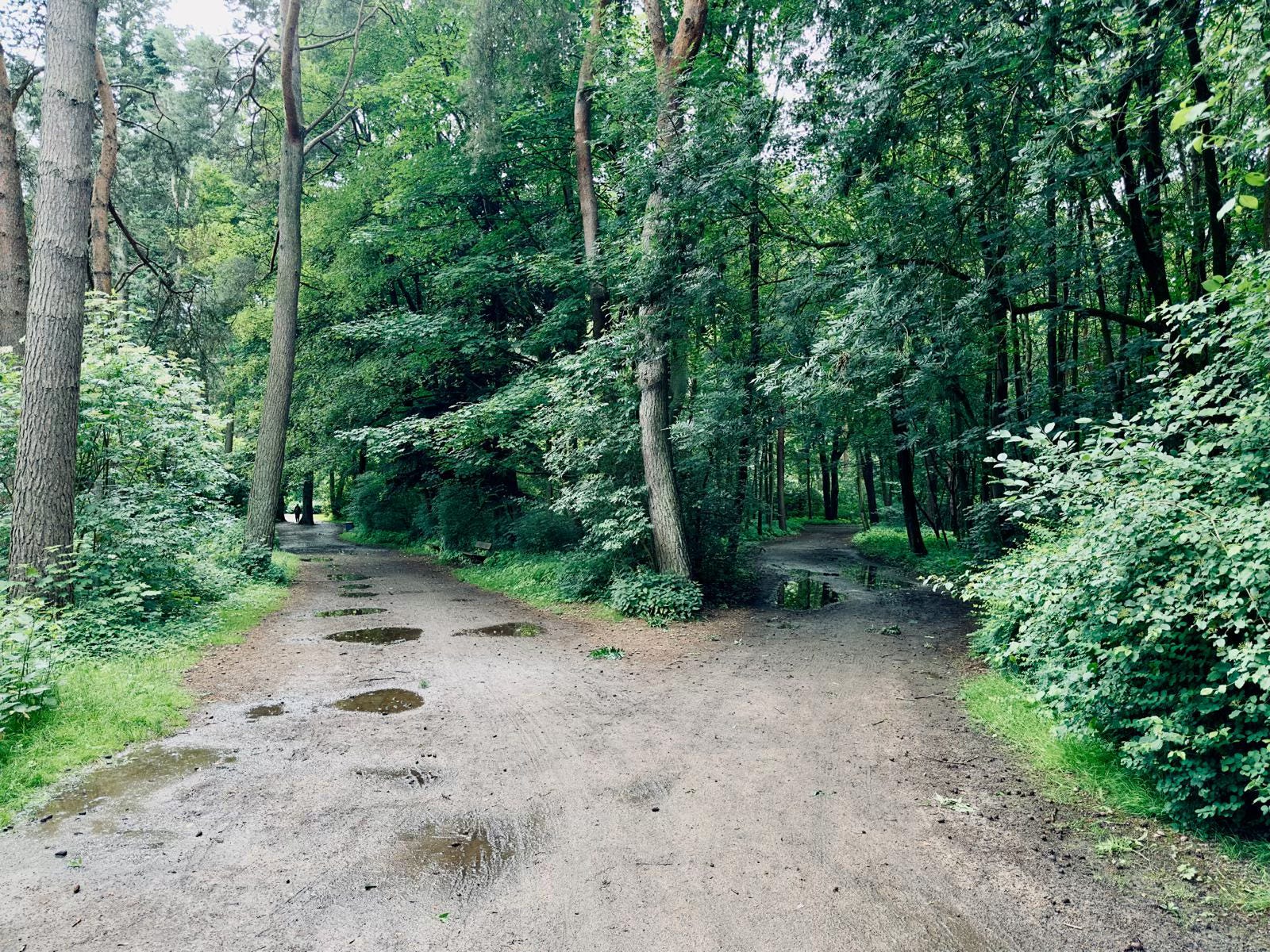
I am writing this thinking about all the years I spent in that space between stimulus and response, frozen, not knowing I had a choice.
Once I ordered food and a soda from a delivery service and the guy who brought my food forgot the drink.
He told me he would come back the next day. I accepted but deep inside I knew I would never see him again.
The next day I sat on my balcony feeling dumb.
It was a small amount of money and I knew my parents would have simply accepted the loss and moved on.
For most people the solution is obvious.
But I sat there with a pressure in my chest that came from the weight of the unfairness, not knowing how to act.
I wanted to solve the problem but I had never learned how to take back control when something went wrong.
It took hours of internal conversation before I came up with the idea of contacting customer support.
Their response was quick.
They sent back the money and gave me a voucher for my next order.
That relief was unlike anything I had felt before.
It was as if the world had been spinning in the wrong direction and I had finally pushed it back.
I felt strong in a way I had not experienced before.
That was the first time I realized I did not have to accept everything that happened to me and that I was not as helpless as I had always believed.
This story might sound trivial.
But for me it was the end of one era and the beginning of another.
What helplessness actually is
Helplessness is the belief that you cannot influence or change a situation even if you try.
And because you believe that, you stop trying.
You stay in the job that makes you miserable because the market feels hopeless and you feel unqualified.
You give up on finding a relationship because you believe the circumstances are working against you.
The belief that you have no control leads directly to the behavior of someone who has given up.
The critical thing to understand is that this is a feeling, not a fixed character trait.
It is something most of us learned early, usually at home, from people who were also helpless and had no other way to show us.
A friend of mine told me a story about his childhood.
He had ingrown toenails that caused him pain and embarrassment for years.
His mother would look at his foot, say it was a shame, and do nothing.
She genuinely believed there was nothing she could do.
My friend was twelve years old when he walked to the doctor alone, explained his problem, and eventually got the surgery he needed.
A twelve year old solved in one afternoon what his mother could not solve across years of watching him suffer.
The helplessness was not about the situation.
It was about the belief.
Why you have to start smaller than you think
Most people who try to escape helplessness start with something too large.
They decide they are going to change their career, fix their relationship, or transform their body all at once.
When it does not work immediately they take it as confirmation that they were right all along.
Nothing changes for people like them.
The way out is not through a dramatic leap.
It is through small repeated experiences of control that slowly rewrite the belief that you have none.
Start with your environment.
Clean your apartment.
Sort out the things you no longer need.
These feel almost too small to matter but they are not.
When you decide that your space will look the way you want it to look, and then you make that happen, you send your brain a message it has not received in a long time.
You are someone who can change things.
From there the steps get slightly bigger.
Unfollow the accounts that make you feel behind or anxious.
You have been tolerating them for months telling yourself that is just how social media feels.
It does not have to.
Removing them is a small act of control that costs nothing and pays immediately.
Then practice it in the world.
When a colleague takes credit for your work in a meeting, say something.
When a friend cancels on you for the third time, tell them it bothers you instead of pretending it is fine.
When a shop charges you incorrectly, ask them to fix it instead of walking away quietly.
When someone interrupts you mid-sentence, finish your thought.
Each of these moments is a rehearsal.
Each one adds evidence to a new belief that is slowly replacing the old one.
What changes when the belief shifts
Once you have enough evidence that you can influence your circumstances, the belief begins to change.
Not overnight.
Over months of small repeated actions.
When that shift happens, the job you have been tolerating for years stops feeling like something you have to endure and starts feeling like something you can change.
You update your CV.
You talk to people.
You send applications.
You realize that the help you were waiting for was always something only you could provide.
You start to apply the same logic to your relationships, your health, your finances.
Everywhere you have been passive, you begin to look for the thing you can actually do.
After a while this becomes part of who you are.
You stop being the person who waits for something to change and become the person who changes things.
That shift is not dramatic.
It happens quietly, one small act at a time, until one day you look around and realize you are living a completely different life.
You will have a choice.
That is when everything starts.
Thank you for reading.
It means a lot that you spent your time here.
If this resonated with you, the best thing you can do is share it with someone who needs to read it. A comment or a like also means more than you think, it tells me that this kind of writing is worth continuing.
And if you are not yet subscribed, you are welcome to join the journey below.
This woke me up. Thank you so much
I cried reading this. Your words and the experiences you shared resonated with me. There’s this particular feeling of grief and relief when you come across something or someone and recognize yourself in it.
Keep doing what you do, David.