

Reading time: 5 minutes
Welcome and thank you for being here. Running Home is a weekly newsletter about awareness, self-reliance, health, and freedom. Real stories, honest struggles, and the hard-won lessons from someone who chose to change his life completely.
If this resonates, Subscribe and join 500 readers.
"The most courageous act is still to think for yourself. Aloud." — Coco Chanel
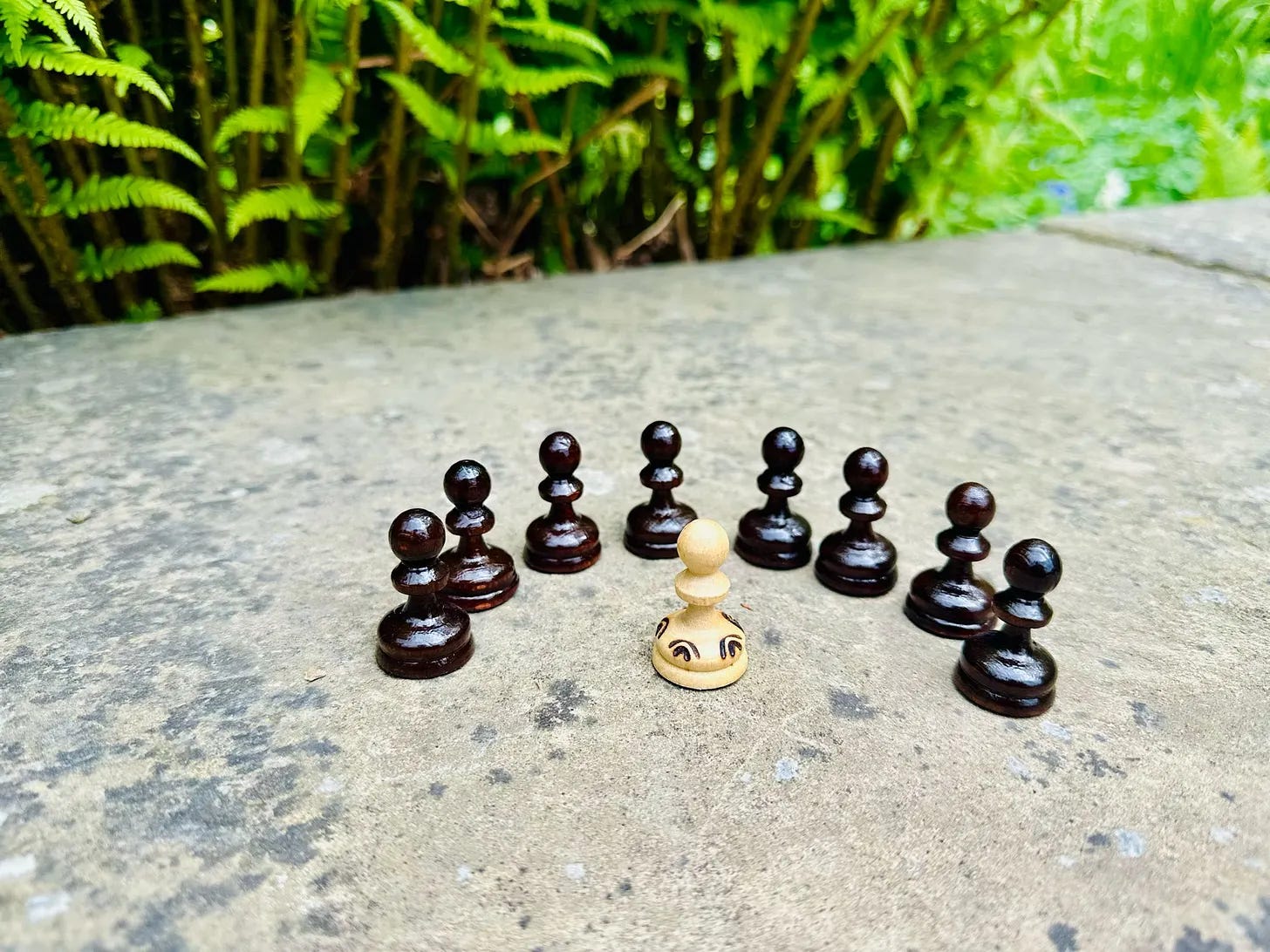
I wrote this after realizing how long I spent asking for permission I could only ever give myself.
Most people think they ask for other people’s opinions because they want information.
But in most cases that is not what they are looking for.
They want permission.
When I told my parents I wanted to travel the world, including countries they had only ever seen covered negatively on the news, they told me not to go.
They were genuinely concerned.
But they had never left the country themselves.
Their opinion was not based on experience.
It was based on fear, and they projected that fear directly onto my decision.
Their answer did not make me happy because I did not get the permission I was hoping for. A motivating response like “Yes, that sounds amazing, go for it” was what I was actually looking for. But my parents did not really reply to me. They replied to themselves, answering how they would decide in the same situation. That is not useful information for anyone but them.
I did the same thing once to a friend. She asked whether she should do a yoga teacher training. Without any expertise in that area, I told her the market was too saturated and she probably should not bother. She looked deflated but said I was probably right.
I went home that evening feeling terrible. The next day I found her and told her to ignore everything I had said and go for it. She did. Today she has fully booked sessions every week, spent months in India, and came home a different person.
What I had given her was not advice. It was my own insecurity dressed up as an opinion.
There is a difference between gathering expertise and outsourcing your thinking. Most people do the second one without realizing it. And it costs them more than they know.
The real cost of asking everyone
When you constantly outsource your decisions to others, three things happen that quietly undermine your life.
You lose alignment with yourself. Imagine you have realized you want a slower, calmer life and are thinking about leaving a big city. But your friends tell you that you would regret it, that cities have more opportunities, that you would be throwing something away. So you stay, because of a fear they gave you, without them ever understanding your real priorities. You live with the consequences. They do not.
Your confidence shrinks. Every time you hand a decision to someone else, you send yourself a message: I cannot trust my own judgment. Over time that message becomes louder. You start asking for opinions on smaller and smaller decisions. The muscle weakens from lack of use.
Responsibility gets diluted. When something goes wrong, you can always say you just followed someone else’s advice. That might feel like relief in the moment but it means you never fully learn. You stay dependent.
When asking for opinions actually helps
There are situations where other people’s input is genuinely valuable. The difference is expertise versus opinion.
Ask people who have done the specific thing you are considering. If you are thinking about running your first marathon, ask a marathon runner. If you are thinking about going solo in your career, ask someone who has actually done it.
Even then, apply a filter. Someone who built a business with wealthy parents and a safety net will give you different advice than someone who did it from scratch. Their experience is real but it is not your situation. Take the information, not the conclusion.
The simple rule: ask for facts and experience, not for permission or validation.
How to make better decisions on your own
Use your long term vision as the filter
Every significant decision I face I run through the same question: does this bring me closer to the life I am building or further from it?
I know I want to keep traveling, stay active, and maintain my freedom. So when the question of buying a car comes up, the answer is straightforward. A car means less walking, more expense, less money for experiences, and a daily cost that does not serve anything I actually value. Decision made in two minutes without asking anyone.
Your vision does not have to be elaborate. It just has to be yours. Once you know what you are building, most decisions answer themselves.
Limit who you ask and why
If you do ask someone, be specific about what you need. You are not looking for their overall verdict. You are looking for one piece of information they have that you do not.
Ask one or two people maximum. More than that and you will end up more confused than when you started, trying to reconcile perspectives that were never designed to work together.
Never ask someone whose opinion comes from fear rather than experience. You can usually tell the difference quickly.
Build the decision muscle with small choices
Start where the stakes are low. Choose the restaurant without consulting anyone. Pick the film for the evening on your own. Decide on the route for your run without asking which way is better.
These decisions feel trivial but they are practice. Every time you make one and it turns out fine, you collect evidence that your judgment works. Over time that evidence becomes confidence and confidence makes the bigger decisions easier.
Accept that discomfort is part of the process
Making a decision alone will always carry some uncertainty. That discomfort does not mean you are doing it wrong. It means you are taking responsibility for your own life, which is uncomfortable by definition.
The alternative is a life where every major choice has been filtered through other people’s fears and limitations before it reaches you. That might feel safer. But it is not your life. It is a version of their lives applied to your circumstances.
The thing nobody tells you
The people whose opinions you are asking will not live with the consequences of your decision. You will.
Your parents who told you not to travel will not be the ones sitting at home wondering what those places were actually like. Your friends who told you to stay in the city will not feel the weight of a life that never matched what you actually wanted.
Only you carry the result. So the decision should start and end with you.
Ask for expertise when you need it. Listen to people who have genuinely done the thing. But stop handing your choices to people who are simply nearby and willing to have an opinion.
Your judgment is not perfect. Neither is anyone else’s. The difference is that yours is calibrated to your life, your values, and your vision.
Start trusting it.
Thank you for reading.
It means a lot that you spent your time here.
If this resonated with you, the best thing you can do is share it with someone who needs to read it. A comment or a like also means more than you think, it tells me that this kind of writing is worth continuing.
And if you are not yet subscribed, you are welcome to join the journey below.
Very wise advice! Would add the situations when we are attempting to do what literally no one around you or that you know has tried or attempted, so you have no reference to go by to see if what you are trying to do can even work, especially if it is very risky, but then you decide to go for it and it makes all the difference in your life. In this case, it is not about choosing the path less traveled but choosing the path no one else you know has traveled, and this is what I define as faith, a belief and conviction on something for which you have or find no enough supporting reference but you still decide to go for it, and then by some mysterious way what seems most improbable becomes a reality as if the universe is waiting for you to take the leap of faith and shape itself to your inspiration or dream. I have lived this many times.
Resonated.
For some reason, people in a small town wanted my approval for breaking their marital vows.
I NEVER gave it.
In reminded them, in our culture, NO promise, not ecen a mortgage, is a Promise in our culture.
Further.
I did INOT have to LIVE ONE HOUR with the consequences of their decision.