

Reading time: 8 minutes
Welcome and thank you for being here. Running Home is a weekly newsletter about awareness, self-reliance, health, and freedom. Real stories, honest struggles, and the hard-won lessons from someone who chose to change his life completely.
If this resonates, Subscribe and join 500 readers.
"Alcohol may be man's worst enemy, but the Bible says love your enemy." — Frank Sinatra
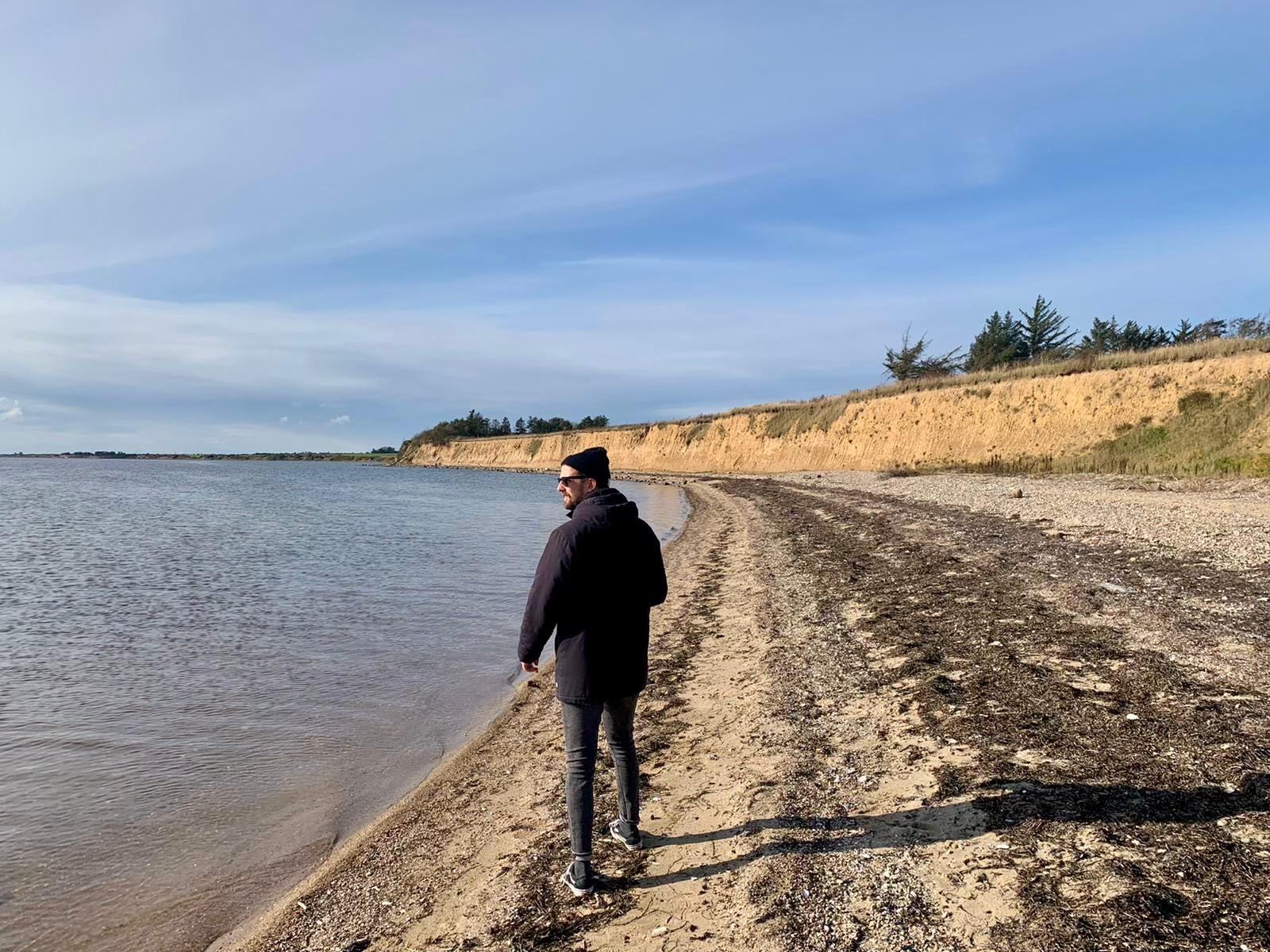
Two years sober and I still have more questions than answers. This is my honest version of the story.
Last week I told you the story of why alcohol and I became best friends for more than twenty years, and what led to our ultimate breakup.

But the story did not end there.
After quitting, I had to face a completely new reality I had never experienced as an adult: living without alcohol.
Thousands of people search every month for questions like how to stay social without drinking, how to maintain friendships after getting sober, or whether quitting changes your social life.
I am not surprised.
If someone had asked me to quit ten years ago, I would have laughed in their face.
Drinking was simply too much fun and I wanted to keep it in my life. But as you read last week, the negative effects slowly outweighed the positive ones and I made my choice to leave that life behind.
The First Thing I Noticed
A few years ago I did Sober January with friends a few times, mostly to prove to ourselves that we did not have a problem if we could go a whole month without drinking.
We met on a Friday night after work and ordered non-alcoholic beers, but the conversations were noticeably different. It felt more like quickly updating each other on the week and nothing more. We admitted quickly that it made no sense to buy another non-alcoholic beer just to sit there in silence, so we called it a night early, around ten.
We literally spent the whole month counting the days until we could drink again.
I tried it once with an ex-girlfriend too, but she gave up after two weeks. She said life was too boring without drinks. Tough statement, if you think about it.
But now I do not have a date I am counting down to. I simply do not drink anymore.
And it changed my social life and how people pigeonhole me.
At the beginning I tried to believe I could keep up my old lifestyle.
In my mind I had pictured myself like those people at college parties who danced around with a Coke Light in their hands, perfectly at ease.
So I hung out with friends as before, but this time I stuck to non-alcoholic drinks. With my closest friends it was not a problem to spend time together, but just like during those sober January months, the night was always much shorter.
When strangers joined us, I went quiet again. I did not feel bad around them, but I did not open up the way I used to with alcohol.
The difference this time was that I had already figured out I was introverted, and that it was completely normal for me not to get into deep conversations with people I did not know. I saw that part of myself less as a problem now, which was a genuine improvement compared to the old days when I believed something was fundamentally wrong with me.
Once the strangers left, I started talking more again with my friends.
But something was still different. The mood no longer built the way it used to after three beers and two hours of drinking.
Instead it sort of plateaued and then quietly descended. Not into anything bad, but it felt like there was an end somewhere on the horizon that had not been there before.
We still laughed sometimes, but it was contained, nothing like the free flow that used to come after a few rounds.
I also started saying no to work related events.
A room full of people wanting to network did not sound like something I wanted to be part of anymore.
Before, I would have arrived already loosened up by a drink or two, ready to jump straight into small talk, crack some jokes, and feel like I belonged.
Sober, those events felt completely different. I felt like a white mark on a dark background that had ended up there by accident. I had to be honest with myself: I genuinely do not like those events.
Because I stopped showing up and started saying no to after-work pizza and beer gatherings, people at work began to label me boring.
Nobody said it out loud, but I could see it in their eyes. They were polite, but they stopped asking me to join them.
After about a year of not drinking, I stopped receiving any invitations to company dinners or parties at all. I only found out about them by accidentally seeing them in someone else’s calendar. They had simply stopped considering me.
That hit me sometimes, because at previous workplaces I had been one of the people who organized those evenings. The one everyone counted on to make it fun.
Then there was our yearly big company event where people came from different countries for workshops and a party. We had dinner together and that part went fine, because I work with these people every day and we had enough to talk about. But when dinner ended, someone suggested going to the bars. Every single person went except me. I knew it made no sense for me to go. I would not drink and I would not enjoy it. So I said a quick, slightly awkward goodbye to everyone and disappeared into the evening.
The next morning I saw the photos from the night I had not been part of. A few years ago I would have been there. I might have felt rough the next day, but I would have been in those photos. I would have had those memories and those new connections too.
This happened not only at work but with almost everyone I used to drink with.
Everyone tried to be polite and understanding about my decision, but I immediately felt they did not see the point of hanging out anymore.
For what, exactly? To sit silently next to each other? I am not exaggerating. That is genuinely how it would have gone.
Quitting alcohol worked like a filter.
Many of the people I used to spend time with got stuck on it. Only a handful came through on the other side, friends who still wanted to see me without drinking, but in a different way.
I have to be honest here. These changes made me sad sometimes. I know this transformation is a process, and I know I was gaining things I could never have had while drinking. But losing things you used to enjoy is still a certain kind of grieving, even when the decision was right.
Quick favor: If this resonates with you, I’d be grateful if you subscribed to Running Home. I share more stories like this about growth, awareness, and the messy journey back to yourself. It’s free, and it helps me keep writing honestly.
What Happened to My Dating Life
I updated my dating profile to say I was sober. I quickly noticed fewer matches after that. Some women wrote to ask whether it was true that I did not drink, or whether it would bother me if they did. I always said it did not bother me, but most of them stopped replying anyway.
Maybe that was not the reason. But I think it played a part.
In my last relationship, when I mentioned I was thinking about quitting, my girlfriend became genuinely upset. She said alcohol played such an important role in her life that she could not imagine being with someone who did not drink. That surprised me, but it also showed me how deeply intertwined drinking is with the way most people connect.
Outside of dating apps, I also rarely end up in situations where meeting someone new is even possible anymore. Almost every girlfriend I ever had I met at a party, after work, during a day-drinking session, or at some kind of event where alcohol was present and lowering everyone’s guard including mine.
Those unpredictable, unplanned moments have gone quiet.
This is something Scott Galloway talks about in almost every podcast appearance, that Gen Z is drinking less and as a result meeting less, having less sex, getting into less trouble. The percentage of single and sexless men and women is rising and he sees a strong connection to the decline in drinking.
I think about that more than I expected to.
Mark Manson, author of The Subtle Art of Not Giving a F*ck, also quit alcohol for a few years and recently started again.
He said that despite all the benefits, something was still missing. He did not enjoy music the way he used to. His marriage became a little flat because even on vacation with his wife they ended up going to bed at nine without doing anything wild or memorable.
I completely understand that. And when I see people I respect making that decision to go back, it sometimes makes me question my own.
But when I am completely honest with myself, I know I do not miss the alcohol.
What I miss is the novelty, the adventure, and the fun moments that alcohol used to help create. That is exactly what Manson missed too. He just admitted he had not found another way to generate those moments without it, partly because he discovered he was far more introverted than he had realized before quitting.
For now I have accepted that those things are missing, without forcing myself toward any particular solution.
That patience is also something new. The old version of me would have tried to escape this feeling immediately rather than just sitting with it.
What I Actually Gained
Quitting alcohol and doing serious work on myself has produced results. Small ones, but real ones.
I can now hold a conversation when I run into someone on the street, someone from my gym or a previous job. I feel comfortable in my own skin in a way I genuinely never did before.
Quitting made it possible to do hard things consistently, like training for marathons. Being sober helped me sleep well, perform better at work, and walk into difficult conversations without falling apart.
Those things built something in me over time.
During the years I was drinking, I was an insecure, shy person with low self-esteem on top of being introverted.
That has changed.
Today I have simply accepted that I am introverted, and when I find myself in a social situation, even with fewer of them than before, I no longer panic or feel the need to perform. I stay, I make eye contact, I ask genuine questions, I listen, and sometimes I am even funny without anything in my glass.
That is something I had genuinely never experienced before in my life.
I also notice that people seem to respect the decision. Friends tell me they admire it. Some say they want to do it too but are not ready, or are still enjoying the advantages I used to enjoy. I do not judge anyone for that. I have been there, and I honestly do not know where I will be in five years.
The Honest Closing
Most people do not actually want to drink.
They want what drinking gives them: the uninhibited conversations, the courage to talk to a stranger, the feeling of being the funniest person at the table. As I wrote last week, those things drove me for over twenty years.
Wanting to be more relaxed, open, and brave is completely human, and having those desires without alcohol does not mean something is wrong with you.
Alcohol is simply a shortcut. It lends you those qualities for an evening without requiring years of slow, uncomfortable work to build them for real. And because life is short, most people would rather borrow them tonight than earn them over years.
I am not going to say I will never drink again. I might.
But I am feeling too good right now mentally and physically to consider it, and I wonder whether starting again after forty even makes sense for me.
If I do drink again, I will write about that too.
Thank you for reading.
It means a lot that you spent your time here.
If this resonated with you, the best thing you can do is share it with someone who needs to read it. A comment or a like also means more than you think, it tells me that this kind of writing is worth continuing.
And if you are not yet subscribed, you are welcome to join the journey below.
I got clean & sober when I was 28. At the time, I resigned myself to never having fun again, but I really wasn't having a lot of fun anyway by the time I quit.
Fortunately, I worked at a small place at the time and wasnt socially involved at work.
I had to stay away from my on/off bf, and other people I partied with if I was going to stay sober.
I didn't see any mention of AA or other recovery programs in your stack, but AA turned out to be my lifeline. I jumped in with both feet, showing up at meetings, talking to people, getting honest, and actually having a feeling of belonging for the first time ever!
I made friends my own age, older friends (all kinds of great, funny, cool people) and met the man that I married. AND I've had many years of fun. I don't think it would have been the same if I tried to go it alone.
So IDK, maybe give a group program a try. Sobriety doesn't have to be a lonely solo journey!
I wish you well!
I can totally relate David, as an introvert myself I always needed a few drinks and another substance to "come alive" as I called it. I felt like I fit in and belonged when I was like that, but I was getting addicted and that led to depression for me and it was a black hole. Today I feel alive and I don't care that I don't fit in sometimes. But a lot of years were wasted and I won't let that happen anymore. Thanks for being real and sharing, it's encouraging as always.