

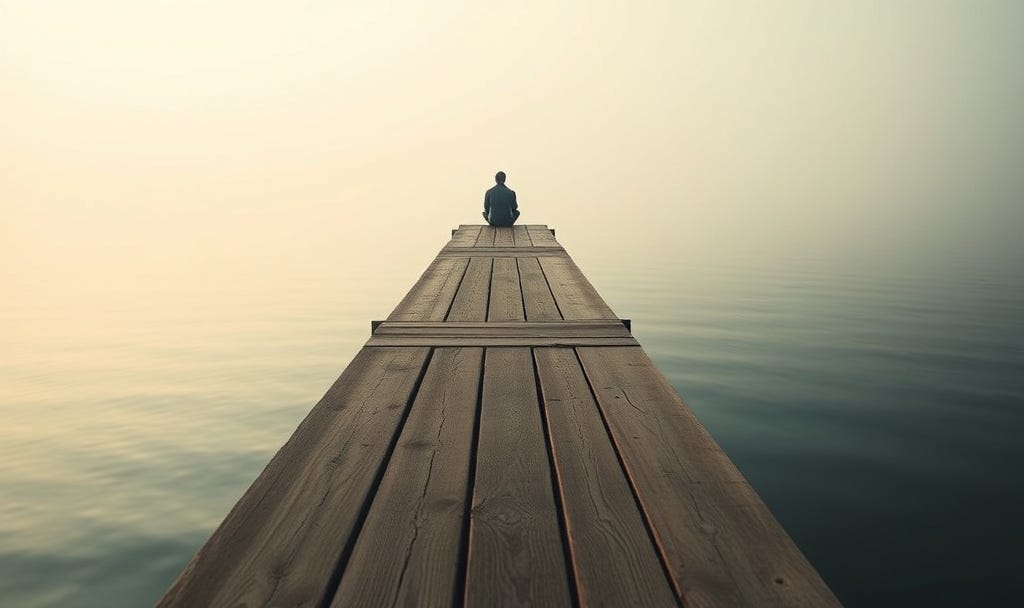
There are thousands of articles on the internet about “how to be happy alone.”
Many people have tried to define the blueprint for truly enjoying solitude and give practical tips we can include in our daily lives.
I’ve read many of those pieces because I was also searching for the recipe, the way to become independent and unbeatable.
That was the essence of being happy alone for me: invincibility.
If my girlfriend breaks up with me, I won’t suffer from loneliness and depression.
Even now, when I think about it, that image still gives me a slight confidence boost, being so independent and bulletproof. And I believe this is what most people are searching for when they Google “how to be happy alone.” We want to avoid being vulnerable when life doesn’t go well.
But here’s what I learned: Being happy alone won’t protect you from negative emotions.
You’ll still be sad when your partner breaks up with you or when your parents die. It doesn’t make your soul bulletproof against all the unchosen pain.
But what it does do is give you the best possible foundation to build the most meaningful relationships in your life.
Here is how this inner state shows itself in your daily life when you achieve it:
You stop being needy. When you’re at peace with yourself, you naturally draw others who respect your boundaries and share your energy, not those who need to fill your silence.
You stop feeling miserable when you see a group of happy people on the street, where FOMO used to eat you up from the inside.
Your weekends alone won’t be a threat anymore, something you just want to leave behind quickly so you can escape from home and go back to the office, where you don’t have to feel the loneliness with that background noise keeping you company.
When you’re content alone, you stop chasing people, jobs, or situations out of fear. You choose based on what’s right, not what fills a void.
Your mood no longer depends on others. You become calm, grounded, and resilient, no matter who comes or goes.
Solitude gives you space to understand what truly motivates you, what drains you, and what kind of life actually makes you fulfilled. This is how I figured out the three core topics I’m focusing on: work, running/fitness, and Substack, with a couple of add-ons like healthy diet, spirituality like meditation, reading, traveling, and friends.
When you’re fine with yourself, spending time alone becomes a privilege.
That’s the time when you let yourself be as you are with all your weird thoughts, ideas, and hobbies. You’re capable of saying (and being fine with it) that you’ll watch all nine Star Wars movies over your weekend or go for a long run because you love to do these things. You stop acting based on what society or anyone expects from you. You stop trying to become something you’re not just to get the approval of others.
My favorite example from my life: In summer, when the weather is nice, people expect you to be outside. This is always the first question on a Monday at work: “Did you enjoy the nice weather over the weekend?” Before I found myself, I would go to the park, even though I didn’t want to, and lie on a blanket checking the time, waiting until I could finally go home. I was performing for society. Today, I close those curtains if I want and I can play PlayStation all day long while everyone else is outside. It doesn’t bother me anymore. Don’t get me wrong, I love nice weather, but it doesn’t dictate when I go out or not.
You’ll start saying “no” frequently to other people because you’ll weigh your options, and “yes” won’t be your only attractive decision.
Your dating life will change. From a needy person, you will transform into someone more confident, someone who is fine staying single because it’s not the worst thing that can happen to you. Ending up in a bad relationship is.
The whole state of being happy alone feels like having 100 million dollars in your bank account.
You don’t touch it, but every decision you make is supported by the fact that you’re rich in reality, so you don’t have to pick the first possible option. You’re calm and confident.
It’s the same here, but in this case, you don’t have a lot of money in the bank. You have a high sense of self-worth in your mind and soul. You act without doubt or panic. You choose wisely when it comes to your own time and company.
In my opinion, this is how it feels when you’re happy alone.
The good thing is that we all can achieve this state in our lives. It’s not an overnight process and it’s not easy either. But there is definitely an invisible line on your path where you can turn your entire inner world around, from being scared of loneliness to being happy in solitude.
In the last couple of years, many people have told me that I’m at risk of being alone forever. They say this because I’m not looking for a romantic partner the way I did before. I do want to have a girlfriend and I’m open to getting married, but not at all costs. I’m not scared of the thought of being alone later in my life.
And that gives me a great feeling about my future because I know that if it happens, I’ll probably be lying on a sun bed somewhere in Southern Europe with my dogs around me, reading a good book, eating fish and vegetables, having friends visit me, and going dancing at the local festival.
There are many worse situations I can think of as outcomes of my life.
Hopefully, I’ve given you a good sense of what “being happy alone” means to me.
Now I want to share some insights from research and my own experience on how to actually get there.
Quick favor: If this resonates with you, I’d be grateful if you subscribed to Running Home. I share more stories like this about growth, awareness, and the messy journey back to yourself. It’s free, and it helps me keep writing honestly.
Alone vs. Lonely: Why the Difference Matters
Before we go further, it’s crucial to understand that being alone and feeling lonely are not the same thing.
Loneliness is an emotional state, a feeling of being disconnected, unsupported, or isolated. You can feel lonely even in a room full of people. You can feel lonely in a relationship. Loneliness is the gap between the connection you have and the connection you want. It’s painful, and research shows it’s genuinely harmful to our health. Studies have found that persistent loneliness is associated with increased anxiety, depression, sleep disturbances, and even shorter lifespans.
Solitude, on the other hand, is simply the physical state of being alone. But more than that, it’s chosen alone time. It’s intentional. It’s when you’re not surrounded by others and you’re okay with that, or even better, you prefer it.
The difference is enormous.
When researchers study solitude versus loneliness, they find that people who choose to be alone often experience benefits: increased creativity, better emotional regulation, reduced stress, and deeper self-awareness. Intentional solitude can actually recharge you, help you process emotions, and give you space to hear your own thoughts.
The key word here is choice.
When you choose to be alone because you genuinely want to, because you have things you want to do, think about, or simply enjoy, that is solitude. When you’re alone because you have no other option and you desperately wish someone were there, that’s loneliness.
Learning to be happy alone is about transforming your relationship with solitude. It’s about making alone time feel like freedom instead of punishment. It’s about filling that time with things that are authentically yours instead of just trying to distract yourself until someone rescues you from it. That’s the moment when many bad romantic relationships are born. I know because I was there so many times.
You can be lonely in a crowd. You can be content alone. The difference is all in how you relate to yourself.
Six Practices That Changed Everything
So how do you actually get there? How do you move from fearing loneliness to embracing solitude?
I won’t pretend there’s a magic formula. It’s not having a bath with candles, eating steak and ice cream every day. It has nothing to do with forced, superficial hedonic life. On the contrary, it’s more about getting rid of things, habits, and people.
What worked for me might not work exactly the same way for you.
But here are the practices that fundamentally changed my relationship with being alone:
1. Accepting Myself (With All My Flaws)
This was one of the hardest and most important steps I took.
It is the foundation everything else is built on.
I spent years trying to be someone I thought other people would approve of.
I suppressed interests that seemed “weird.” I shaped my opinions to fit in. I performed a version of myself that I thought would be more likeable.
And you know what? I was never truly happy, not alone and not with others.
Because when you’re constantly performing, you’re never really with yourself. You’re always one step removed, monitoring how you’re coming across, adjusting your behavior based on an invisible audience.
Learning to accept myself meant acknowledging my actual interests, even the ones that didn’t fit the image I wanted to project. It meant admitting my flaws instead of trying to hide them. It meant letting go of the person I thought I shouldbe and getting to know the person I actually am.
I wrote about this process in detail in my articles about self-connection.


It’s deep work. It takes time. But it’s absolutely essential.
Because you can’t enjoy your own company if you’re faking who you are, even when no one else is watching.
2. Removing Social Media (Instagram)
This was another tough one.
Social media, especially Instagram because it is so visual, is designed to make you feel like everyone else is living a better, fuller, more connected life than you are. Every scroll reinforces the idea that you’re missing out, that your life isn’t enough, that being alone means you’re failing somehow. I remember my ex-girlfriend got immediately disappointed about our weekend when she saw her girlfriend’s reels and stories on Instagram.
I wrote an entire article about why I removed the app and how it affected me, but here’s the short version: as long as I constantly compared my quiet Saturday night to someone else’s life snapshots, I couldn’t be happy alone. The comparison was poison.
When I deleted it, something shifted. My alone time stopped feeling like evidence that I was losing at life. It just became my time. Without the constant feed of other people’s highlight reels, I could finally see my own life clearly. And it was actually pretty good.
If you’re struggling to be happy alone while scrolling through Instagram daily, you’re fighting an uphill battle. The app is literally engineered to make you feel inadequate.
Give yourself a fighting chance and take a break from it.
3. Spending Actual Time Alone (A Lot)
This sounds obvious, but hear me out: most people who say they want to be happy alone are actually avoiding being alone.
They fill every silence with podcasts, music, TV shows, or scrolling. They schedule back-to-back plans so they’re never home for more than a few hours. They treat alone time like something to get through as quickly as possible.
But you can’t become comfortable with something you’re constantly running from.
I had to deliberately create space for real solitude. Not just being physically alone while my brain was occupied with noise, but actually being with myself. Sitting in silence. Going for runs without headphones. Yes, I do that sometimes for 3 hours without having any problem with it. Cooking without the TV on. Eating dinner at my own table without my phone.
At first, it was uncomfortable. My mind would race. I’d feel restless. But gradually, I started to hear my own thoughts. I started to notice what I actually wanted to do with my time. I started to enjoy my own company.
You have to spend time with yourself to learn who you are. And you have to know who you are to be happy alone.
4. Being Physically and Mentally Active
When I’m inactive, when I’m just sitting around scrolling or watching TV for hours, I feel terrible. It doesn’t matter if I’m alone or with people. Inactivity makes me feel sluggish, purposeless, and low.
You might not realize the difference because you’ve been inactive for so long that you’ve forgotten what it feels like to be full of energy from living an active lifestyle.
Running has become one of my primary ways of being happy alone. It’s my time. It’s when I think, process, and sometimes just exist without thinking at all. I started running seriously a few years ago, and it transformed not just my body but my entire relationship with solitude.
If you’re interested in starting, I wrote a beginner’s guide that covers everything you need to know to kick off.
But it doesn’t have to be running. It can be lifting weights, doing yoga, hiking, or dancing in your living room, anything that gets you moving. Physical activity releases endorphins, yes, but more importantly, it gives you a sense of accomplishment. It proves to yourself that you can do hard things. And that confidence spills over into everything else.
Mental activity matters too.
Reading, writing, learning something new, or working on a project you care about makes alone time feel rich instead of empty. You don’t have to be fully analog. I’ve also subscribed to many good YouTube channels and I try to learn from those selected people, but it happens on purpose and not just as background noise.
When you’re actively engaged in something meaningful, being alone doesn’t feel like absence. It feels like presence.
5. Doing Hard Things
This one surprised me at the beginning.
I used to think happiness came from comfort, ease, and relaxation. The well-known warm bath with candles, steaks, ice cream, and hedonic stuff. But I’ve learned that some of the most satisfying moments of my life came from doing things that were difficult.
Running a marathon. Learning a new skill. Pushing through a challenging project. Having a hard conversation with myself about who I want to be. I remember when I wrote down all my bad behaviors I had in relationships or at work and I got red and nervous saying those things out loud because I felt ashamed, but those things had to come out.
These things don’t make me happy in the moment. They’re uncomfortable, even painful sometimes. But they give me something deeper: satisfaction, contentment, self-respect.
When you do hard things alone, you prove to yourself that you’re capable.
And that knowledge changes everything. You stop seeing yourself as someone who needs to be rescued or entertained. You start seeing yourself as someone who can handle life.
6. Planning Things (Otherwise Nothing Happens)
Here’s an unglamorous truth: if you don’t plan your alone time, you’ll probably waste it.
And I’m going to destroy the romantic illusion of being spontaneous because it’s a myth that if you don’t plan but act spontaneously, you experience more and better things in life than when you plan.
That’s not true.
It’s called survivorship bias. It happens when we only see the “survivors” or successful cases and ignore the failures. This creates a distorted view, making success seem easier or more likely than it really is. We all have that one story when we didn’t plan anything on a Saturday and it turned into one of the best nights of our lives.
Well, how many stories like that do we actually have? I can count them on one hand.
On the other hand, I’ve missed many good concert tickets, movie tickets, cheap flights, great hotels, good spots on the beach, trains, buses, people, and experiences because I didn’t plan.
And I can tell you that with planning, I will always win over spontaneity. Because if you plan, then it will actually happen. It’s not speculation.
If you don’t plan, your life will look like this:
You’ll tell yourself you’re going to do something meaningful, but you’ll end up scrolling for three hours. You’ll think about going for a run, but you’ll stay on the couch. You’ll imagine cooking a nice meal, but you’ll order takeout and eat it while watching Netflix.
I’m not saying you need to schedule every minute. But having some structure helps.
Knowing that Saturday morning is for a long run, Saturday afternoon is for cooking, and Saturday evening is for reading makes alone time feel intentional instead of aimless.
Plan the things that matter to you. Otherwise, the default activities (scrolling, watching, numbing) will fill the space.
You Still Need People (And That’s Okay)
Here’s something I already mentioned above, but it is important and gets overlooked in most articles about being happy alone:
Learning to be happy alone doesn’t mean you don’t want or need connection.
Let me say that again: Being happy alone is not the same as preferring isolation or rejecting relationships.
It means you’re not desperate for connection.
It means you can be alone without falling apart. It means you choose connection from a place of wholeness, not from a place of lack.
This is crucial because some people hear “be happy alone” and think it means becoming a hermit, cutting people off, or convincing yourself you don’t need anyone.
That’s not what this is about.
The strongest, healthiest relationships happen when both people are whole on their own.
When you’re happy alone, you don’t need the other person to complete you or save you from yourself. You choose them because they add something beautiful to an already good life.
In my article about how to find friends in adulthood, I talked about the challenges of building connection as adults. But here’s the connection between that piece and this one: You can pursue friendship from a place of abundance, not desperation.
When you’re comfortable alone, you’re not clinging to every potential friendship out of fear. You’re not staying in bad relationships because you can’t handle being single. You’re not saying yes to plans you don’t want just to avoid an empty weekend.
You’re free to choose wisely.
And paradoxically, that makes you better at relationships. Because you’re showing up as your real self, not a desperate version of yourself trying to avoid loneliness.
Being happy alone doesn’t make you anti-social. It makes you selectively social. And that’s a good thing.
What Freedom Actually Feels Like
Being happy alone is one of the most liberating skills you can develop.
It’s not about isolation.
It’s not about convincing yourself you don’t need people.
It’s about self-sufficiency, about knowing that you can be okay, that you can even thrive, regardless of your circumstances.
When you’re comfortable alone, you’re free to choose your company wisely. You’re free to say no to relationships that don’t serve you. You’re free to spend your time the way you actually want to spend it, not the way you think you’re supposed to.
This is learnable. This is achievable.
You’re not broken if you’re not there yet. I wasn’t there for 35 years. And some days, I still struggle with it. But the direction matters more than the destination.
Start small. Spend an hour alone without distraction. Notice what comes up. Work on accepting yourself a little more each day. Remove the things (like social media) that make you feel inadequate. Add the things (like movement, meaningful projects) that make you feel alive.
The goal isn’t to never need anyone. The goal is to be okay with yourself so that when you do connect with others, you’re doing it from strength, not from desperation.
That’s freedom.
And it’s worth every uncomfortable step it takes to get there.
Thanks for sticking with me through this one. If you’re going through something similar, or have your own experience with this, drop a comment. I read every one. — David
Reference
Nguyen, T., Ryan, R. M., & Deci, E. L. (2018). “Solitude as an Approach to Affective Self-Regulation.” Personality and Social Psychology Bulletin, 44(1), 92-106. [This study found that when people actively choose to be alone, solitude leads to relaxation and reduced stress, but when solitude is forced, those benefits disappear]
Read More:


I feel this so much. After 23 years of marriage, living alone has been unexpectedly joyful. My life feels full…family, friends, meaningful work! So my aloneness isn’t lonely, it’s spacious. I love moving at my own rhythm, listening to myself without adjusting or explaining. I am not alone because something is missing. I am alone because nothing is lacking! ☀️ Loved your article!
Excellent article. I see this in me. I've been through multiple marriages and relationships. Now 17 years on my own in my senior years. I travel alone and meet wonderful people. I have a part-time gig that I love and I meet interesting people. I strength train regularly without interrupting someone else's schedule. I cook all my own healthy meals not worrying about making them too spicy.
Did I enjoy being in relationships? Absolutely. Do I enjoy being alone and taking care of myself? Absolutely.
Go where the river flows takes you. Walk the adventurous path where new things wait.
Being alone? Yup, I can do that.